
Fix Over-Processed Lash Lifts Safely: Step-by-Step

Table of Contents
- Signs of Over-Processed Lashes
- Immediate Aftercare Steps for Damaged Lashes
- How to Reverse Lash Lift Damage with Hydration and Conditioning
- Lash Lift Aftercare Tips to Prevent Future Damage
- How Long to Wait Between Lash Lifts
- Controlled Relaxation Methods and What to Avoid
- When to Seek Professional Help
- Conclusion
Last Updated: August 28, 2026
Signs of Over-Processed Lashes
Over-processed lashes tell a clear story: your lash structure has been damaged by chemical exposure, heat, or incorrect technique. The damage ranges from cosmetic (fixable at home) to structural (requiring professional intervention).
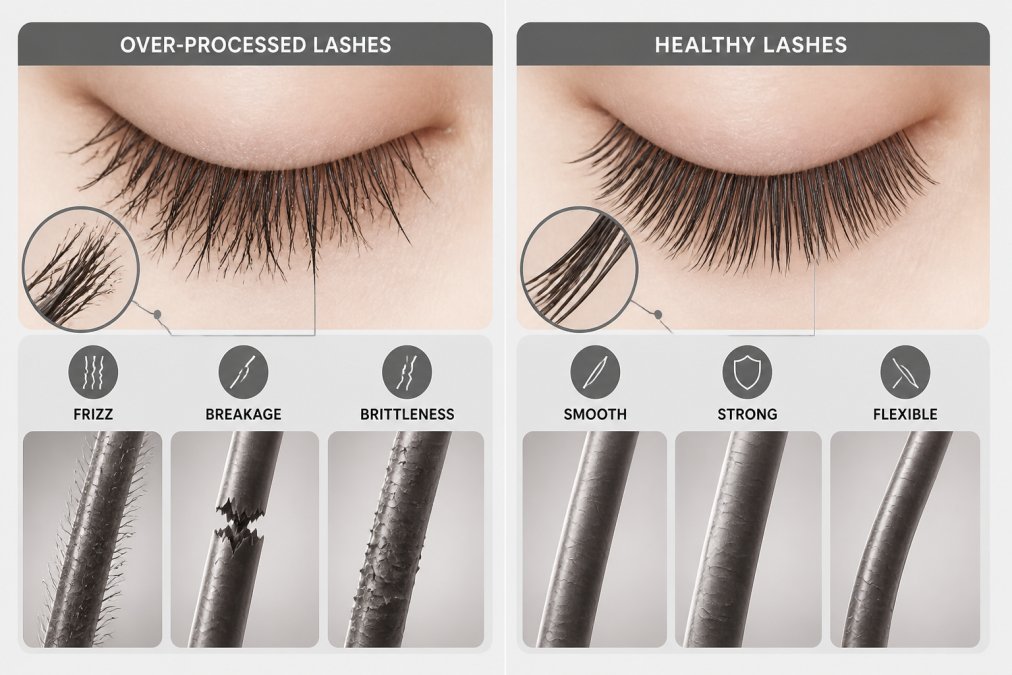
Visual identification guide
A healthy lash has a smooth cuticle, uniform thickness along the hair shaft, and a consistent curl pattern. Over-processed lashes show distinct visual markers.
Frizz and roughness appear as a fuzzy texture along the lash line. Run your finger gently along the lash, healthy lashes feel smooth; damaged ones feel rough or bumpy. This indicates the hair cuticle has been lifted or partially stripped by chemical processing.
Breakage manifests as shortened lashes or visible gaps in your lash line. Broken lashes won't regrow until the natural lash growth cycle completes (6-8 weeks) (peer-reviewed research). If you're seeing breakage now, the chemical damage has already compromised the hair shaft's structural integrity.
Brittleness and dehydration show up as lashes that feel stiff or snap easily when you touch them. Healthy lashes bend slightly; brittle lashes snap. This happens when the lash lift solution or neutralizer has stripped moisture from the hair shaft, leaving the protein structure exposed and fragile.
Discoloration or dullness suggests oxidative damage from the perming solution or prolonged heat exposure. Healthy lashes have a subtle shine; over-processed lashes look matte or chalky.
When damage is chemical vs. cosmetic
Not all over-processed lash lift issues require professional help. Understanding the difference between cosmetic damage and chemical damage determines whether you can fix it at home.
Cosmetic damage affects appearance but not structure. Lashes that have lost their curl temporarily, feel slightly dry, or look less defined can usually recover with hydration and conditioning at home. The hair shaft itself is intact.
Chemical damage compromises the hair structure itself. If lashes are breaking, snapping, or showing severe frizz that doesn't improve with conditioning, the perming solution or neutralizer has altered the protein bonds in the hair. This requires professional assessment and often professional treatment to reverse safely.
A quick test: gently pull a lash (don't yank it). If it snaps immediately or feels like brittle straw, that's chemical damage. If it bends slightly before breaking, that's cosmetic damage with some structural compromise.
Immediate Aftercare Steps for Damaged Lashes
The first 24-48 hours after noticing over-processed lash lift damage are critical. Your lashes need immediate relief from further stress and exposure.
Stop all heat and mechanical stress immediately. This means no eyelash curlers, no rubbing your eyes, no hot showers aimed at your face. Heat will accelerate moisture loss from already-dehydrated lashes. Mechanical stress (curling, brushing harshly) will increase breakage. Your lashes need complete rest.
Cleanse gently with lukewarm water only. Avoid makeup remover, cleansing oils, or any product for 48 hours. Let your lashes recover without additional chemical exposure. Use your fingertips only, no washcloth, no brush.
Apply a hydrating serum or oil to damp lashes. While lashes are still slightly damp from cleansing, apply a nourishing product. This locks in moisture at the critical moment when the hair cuticle is most receptive. Pat gently; don't rub.
Avoid contact lenses for 2-3 days if possible. Contact lens solution and the friction of insertion/removal add stress to already-compromised lashes. If you must wear contacts, be extremely gentle during insertion and removal.
Skip makeup for at least 48 hours. Mascara, eyeliner, and eyeshadow all require removal, which means additional rubbing and chemical exposure. Your lashes need a break.
How to Reverse Lash Lift Damage with Hydration and Conditioning
Once you've stopped the immediate stress, the recovery phase begins. This is where hydration and conditioning actually reverse the visible signs of over-processed lashes.
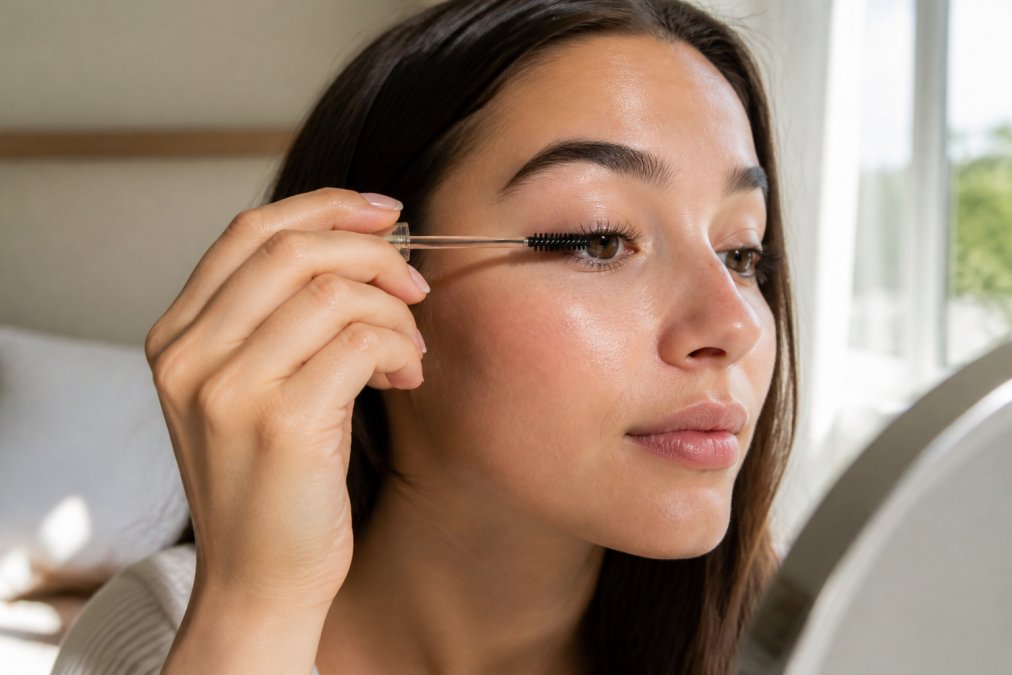
The lash hair shaft is made of protein and keratin. Over-processing strips moisture and damages the protein structure. Reversing this requires consistent hydration and protein replenishment over 2-4 weeks.
The role of castor oil and squalane
Castor oil and squalane are the two most effective ingredients for reversing over-processed lash damage because they work differently, and together.
Castor oil penetrates deep into the hair shaft. It's rich in omega-6 and omega-9 fatty acids, which restore the lipid layer that protects the hair cuticle. When the cuticle is damaged, moisture escapes. Castor oil seals it back. Apply castor oil nightly for 3-4 weeks. Use a clean spoolie to brush it through from root to tip. Leave it on overnight; rinse gently in the morning with lukewarm water.
Squalane sits on the surface, creating a moisture barrier. Unlike castor oil, squalane doesn't penetrate, it locks in hydration that's already in the hair. Use squalane during the day (or after castor oil has been rinsed out). Apply a tiny amount with a spoolie, focusing on the mid-shaft and tips where damage is most visible.
The combination works: castor oil restores internal moisture and protein; squalane maintains that hydration throughout the day. Most people see visible improvement in frizz and brittleness within 10-14 days of consistent application (peer-reviewed research).
Protein treatments and keratin recovery
Damaged lashes have lost structural protein. Protein treatments rebuild the hair shaft from inside.
A basic protein treatment involves hydrolyzed keratin or silk protein serums applied 2-3 times per week. These products contain broken-down protein molecules small enough to penetrate the damaged cuticle and bond to the hair shaft. Apply to damp lashes, leave for 10-15 minutes, then rinse gently.
For more intensive recovery, consider a professional keratin treatment at a lash salon. These use heat-activated keratin that bonds permanently to the hair structure. One professional treatment combined with 3-4 weeks of home hydration typically restores lash health completely.
The timeline matters: protein treatments work best when combined with hydration (castor oil/squalane). Protein without hydration will make lashes feel stiff. Hydration without protein won't rebuild the structural damage. Use both.
Lash Lift Aftercare Tips to Prevent Future Damage
Preventing over-processed lash lift damage is far easier than reversing it. The difference between a healthy lash lift and an over-processed one often comes down to aftercare protocol.
Wait 24-48 hours before wetting lashes. The lash lift solution needs time to fully set. Water exposure too soon can weaken the curl and damage the newly-formed bonds. This is non-negotiable.
Avoid oil-based products for the first week. Oils break down the lash lift solution faster, reducing how long the lift lasts. Wait at least 7 days before applying castor oil or oil-based serums. After that, oil-based hydration is actually protective.
Sleep on your back if possible. Sleeping face-down on a pillow compresses lashes and creates friction that damages the curl and the hair structure. Back-sleeping prevents this entirely. If side-sleeping is your habit, use a silk pillowcase to reduce friction.
Use a silk or satin lash brush, not synthetic. Synthetic spoolies create static and friction that roughens the cuticle. Silk or satin bristles glide smoothly without damaging the hair. This matters more with over-processed lashes.
Apply a protective serum before bed. A light hydrating serum or oil applied before sleep protects lashes during the vulnerable nighttime hours when they're compressed against your pillow. This prevents dehydration and brittleness.
How Long to Wait Between Lash Lifts
Over-processed lash lift damage often happens because lash lifts are repeated too frequently. Your natural lashes need recovery time between treatments.
A healthy lash growth cycle is 6-8 weeks (peer-reviewed research). During this time, old lashes shed and new ones grow in. If you get a lash lift every 4-6 weeks, you're re-processing lashes that haven't fully recovered from the previous treatment. This compounds chemical damage.
The safe interval is 8-12 weeks between lash lifts. This allows:
- Full shedding and regrowth of the lash cycle
- Complete hydration recovery after chemical processing
- The lash structure to rebuild its protein bonds
If your natural lashes are fine, thin, or already showing signs of damage, extend the interval to 12+ weeks. If your lashes are thick and resilient, 8-10 weeks is acceptable. Never go shorter than 8 weeks.
During the off-weeks, maintain lash health with hydration and conditioning. A well-maintained lash between treatments will tolerate the next lift far better than a neglected one.
Controlled Relaxation Methods and What to Avoid
Sometimes an over-processed lash lift can be partially reversed without professional intervention. The goal is to gently relax the curl back toward a natural state without causing additional damage.
Safe relaxation without additional chemical processing
Moisture relaxation is the gentlest approach. Consistent hydration with castor oil and squalane naturally relaxes an overly tight curl over 3-4 weeks. The moisture softens the hair structure, allowing it to gradually settle into a less extreme curl. This isn't fast, but it's safe and actually improves lash health.
Steam relaxation can help, but only in moderation. Hold your face 15-20 cm above a bowl of hot (not boiling) water for 5-10 minutes, 2-3 times per week. The steam softens the hair structure without chemical exposure. Never use a facial steamer directly on lashes, the pressure can cause breakage.
Gentle brushing with a soft spoolie can gradually reshape the curl as lashes recover. Brush downward (against the curl direction) gently, 1-2 times daily. This works only if lashes are already hydrated and flexible, attempting this on brittle lashes will cause breakage.
What not to do: lash curlers, rubbing, and heat
Lash curlers are forbidden. A curler on an over-processed lash can cause immediate breakage. The mechanical pressure combined with the hair's compromised structure is a recipe for snapping lashes. Wait until lashes have fully recovered (4-6 weeks of hydration) before using a curler again.
Rubbing your eyes damages everything. Rubbing creates friction that roughens the cuticle, causes breakage, and accelerates moisture loss. If your eyes itch, use a clean finger to gently press (not rub) the outer corner of your eye. Never rub the lash line itself.
Heat, from blow dryers, hot showers, or sun exposure, accelerates dehydration. Avoid directing hot air at your face. Keep showers lukewarm. Wear sunglasses outdoors to protect lashes from UV damage and heat. Heat is the enemy of lash recovery.
Chemical relaxers or lash perms are not an option. Some people think a second chemical treatment will "fix" an over-processed lash lift. It won't. It will compound the damage. Your only option is hydration, conditioning, and time.
When to Seek Professional Help
Most over-processed lash lift damage can be managed at home with hydration and conditioning. But some situations require professional intervention.
Seek professional help if:
Lashes are breaking consistently despite 2 weeks of home care. This indicates structural damage that home hydration alone cannot reverse. A professional lash technician or dermatologist can assess whether the damage is reversible or if you need to wait for natural shedding and regrowth.
Lashes feel painful or your eyes are irritated. Over-processed lashes sometimes cause contact dermatitis or chemical irritation that persists. A dermatologist can rule out infection or allergic reaction and recommend safe treatment.
You're experiencing significant lash loss (more than the normal 1-2 lashes per day). Excessive shedding suggests the chemical damage has compromised the lash follicle itself. This requires professional assessment to prevent permanent damage to the follicle.
Frizz and brittleness don't improve after 3-4 weeks of consistent hydration. Some lashes are too damaged to recover at home. A professional keratin treatment or lash repair service may be necessary.
A professional lash technician can also assess whether your lashes are ready for another lift or whether you need to wait longer for full recovery. They can identify damage that isn't visible to the untrained eye and recommend a recovery timeline specific to your lashes.
At Kyro Beauty, we emphasize prevention over repair. Our lash lifting kits are formulated to minimize chemical damage when used correctly, with clear aftercare instructions designed to protect lash health. If you've experienced over-processed lash lift damage from another service, our hydration and conditioning products can support your recovery, but the most important step is understanding what went wrong and preventing it next time.
Fixing over-processed lash lift damage takes patience, but it's absolutely reversible with the right approach. The combination of hydration, protein conditioning, and time restores lash health in most cases. The real challenge is preventing it from happening again. Choose your lash lift provider carefully, follow aftercare instructions precisely, and space treatments at least 8-12 weeks apart. Your natural lashes are irreplaceable, treat them with the care they deserve. Shop the Kit at Kyro Beauty to discover our professional-grade lash care solutions, formulated to support lash health at every stage of your beauty routine.
Frequently Asked Questions
Can you redo a bad lash lift?
Not immediately. If your lash lift was over-processed, applying another chemical treatment will cause further damage to the hair cuticle and lash structure. Wait at least 4-6 weeks while you restore hydration and conditioning with castor oil, squalane, and protein treatments. A professional can assess whether your lashes have recovered enough for a safe redo, or recommend a gentler alternative like a lash tint instead.
What are the signs of an over-processed lash lift?
Over-processed lashes appear frizzy, brittle, and may show visible breakage along the hair shaft. They feel dry and straw-like rather than smooth, lose their curl quickly, or curl too tightly and become difficult to manage. You may also notice eye irritation, redness, or sensitivity around the lash line if the perming solution or neutralizer contacted the eye area. Chemical damage typically appears within 24-48 hours after the treatment.
How long should I wait before getting another lash lift?
Standard guidance is 6-8 weeks between lash lifts to allow your lashes to complete their natural growth cycle and recover from chemical processing. If your lashes are over-processed, extend this to 8-12 weeks and focus on intensive hydration and conditioning during the waiting period. Never rush back to chemical treatments if your lashes still feel brittle or show breakage, as this accelerates damage and can lead to permanent hair loss.
What products help repair over-processed lashes?
Castor oil and squalane are highly effective for restoring moisture and strengthening the hair cuticle. Apply nightly using a clean spoolie to coat each lash thoroughly. Protein-based treatments and keratin serums rebuild the hair shaft damaged by perming solution and neutralizer chemicals. Look for products with pH-balanced formulas to restore your lash's natural moisture barrier. Avoid lash curlers and rubbing during recovery, as mechanical stress compounds chemical damage.
