



Is a Keratin Lash Lift Worth It? Cost vs. Results

Table of Contents
- What Is a Keratin Lash Lift and How Does It Work?
- Keratin Lash Lift vs. Regular Lash Lift: Key Differences
- How Long Does a Keratin Lash Lift Last?
- Pros and Cons: Is the Extra Cost Justified?
- Keratin Lash Lift Aftercare: Protecting Your Investment
- Safety and Natural Lash Health
- Cost-Per-Wear Analysis: Salon vs. At-Home
- Conclusion: Is It Worth the Investment?
Last Updated: August 24, 2026
What Is a Keratin Lash Lift and How Does It Work?
A keratin lash lift is a semi-permanent cosmetic treatment that curls and shapes your natural lashes using a protein-infused solution, creating lifted, voluminous lashes without extensions or glue. Unlike traditional lash lifts that use generic perming solutions, keratin formulas enrich the lash structure with nourishing proteins, collagen, and vitamins during the lifting process.
The treatment works by temporarily altering the hydrogen bonds in your lash keratin structure. A technician applies a lifting lotion to your lashes, which softens the protein chains. Your lashes are then shaped around silicone rods and a setting lotion locks the new curl in place. Results last through your natural lash growth cycle, typically six to eight weeks depending on your anagen phase and aftercare adherence (peer-reviewed research). The entire appointment usually takes 45 to 90 minutes.
Keratin Lash Lift vs. Regular Lash Lift: Key Differences
A regular lash lift uses a chemical perming solution that opens and reshapes the lash structure, then sets it. A keratin lash lift does the same thing but adds protein-based conditioning agents into the formula, so your lashes are treated rather than just processed.
Keratin formulas typically include collagen, Vitamin E, and amino acids alongside the active lifting compounds. Your lashes feel softer and more resilient after a keratin treatment, whereas regular lifts may leave them slightly drier or more brittle. A keratin lash lift often holds its curl for the full six to eight weeks of your lash growth cycle, while regular lifts sometimes drop curl after four to six weeks.
Cost reflects this complexity. Keratin lash lifts typically run 30 to 50 percent higher than regular lifts at most salons. The safety profile is comparable, both use chemical processing and carry the same risks if applied incorrectly.
How Long Does a Keratin Lash Lift Last?
A keratin lash lift typically lasts six to eight weeks, depending entirely on your natural lash growth cycle and aftercare adherence. Your lashes naturally shed and regrow in phases. The anagen (growth) phase lasts roughly six to eight weeks (peer-reviewed research). Once new lashes begin pushing out the treated ones, the curl gradually softens.
Most people notice the curl beginning to relax around week five or six. Several factors shorten this timeline: sleeping on your face, excessive moisture exposure in the first 24 to 48 hours, rubbing your eyes frequently, and using oil-based makeup removers. Chlorine and saltwater also weaken the set.
Conversely, strict aftercare can extend the visible lift by a week or two. Sleeping on your back, keeping lashes dry, using a lash serum, and avoiding heavy eye makeup all help preserve the curl.
Pros and Cons: Is the Extra Cost Justified?
The Real Benefits
The case for paying extra for keratin rests on three concrete advantages: lash health, curl retention, and the conditioning effect during processing.
Your lashes actually feel better during and after the treatment. The keratin-infused solution conditions the lash cuticle as it lifts, so you're not left with dry, processed-feeling lashes. This matters if you're lifting lashes regularly, repeated chemical processing without conditioning can lead to lash breakage and thinning over time.
The curl holds more consistently through the full six to eight weeks. Regular lash lifts often soften noticeably by week five, while keratin lifts maintain their shape through week seven or eight, giving you more weeks of aesthetic benefit per treatment.
Keratin lash lifts reduce the risk of cumulative damage. If you lift your lashes every eight weeks for a year, you're doing this treatment six times. The conditioning component in keratin formulas appears to mitigate long-term damage, keeping your natural lash density and strength more stable over repeated treatments.
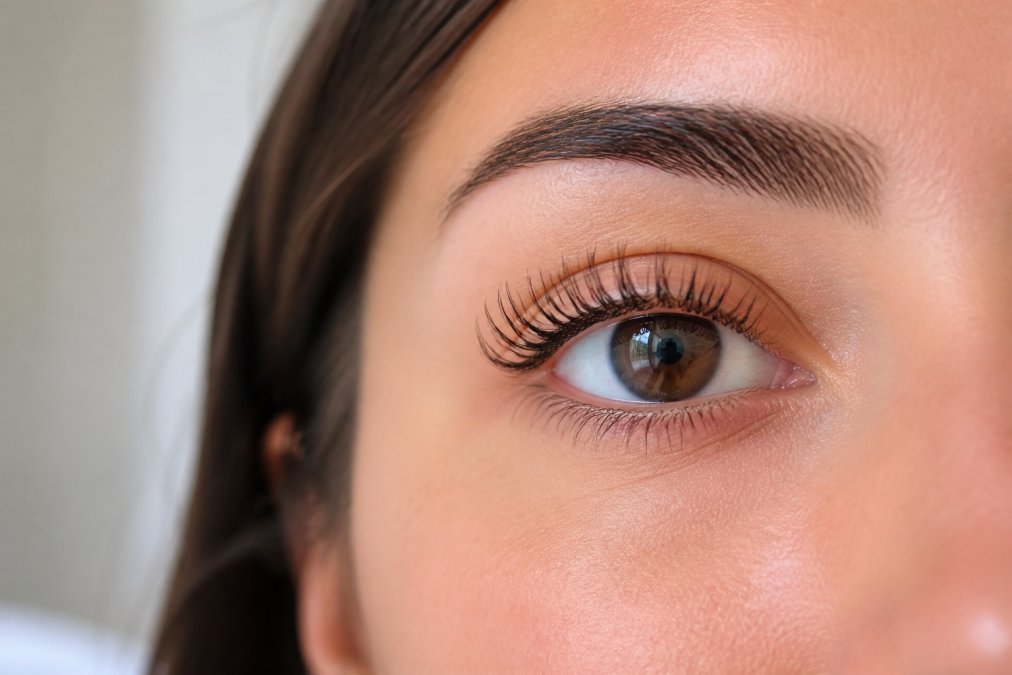
For people with sensitive eyes or a history of reaction to cosmetics, keratin formulas are often gentler. The aesthetic result is genuinely superior, keratin-treated lashes look shinier and more defined because the conditioning adds subtle gloss and smoothness to the lash surface.
The Honest Drawbacks
The primary drawback is cost. You're paying a premium, typically 30 to 50 percent more than a regular lift, for benefits that are real but incremental. If your budget is tight, a regular lash lift delivers 80 percent of the visual result at a lower price.
Second, the results are still temporary. Six to eight weeks is not a long time if you're paying premium pricing every cycle. Over twelve months, you're making a significant investment for a semi-permanent effect.
Third, quality and formulation vary significantly between salons and brands. Not all "keratin lash lifts" are created equal. You need to research your salon carefully and ask about the specific brand and ingredients they use.
Fourth, keratin lash lifts require strict aftercare. The first 24 to 48 hours are critical. You cannot shower, swim, or expose your lashes to steam or moisture. If you travel frequently or have an unpredictable schedule, maintaining the aftercare protocol is difficult.
Finally, results depend heavily on your natural lash type. If your lashes are naturally very straight and stubborn, a keratin lift may not hold as well. If your lashes are fine or fragile, even a gentle keratin formula carries some risk.
Keratin Lash Lift Aftercare: Protecting Your Investment
Aftercare determines whether your keratin lash lift delivers the promised six to eight weeks or drops to four weeks. The first 48 hours are non-negotiable.
Do not expose your lashes to water, steam, or humidity for the first 24 hours. The keratin structure is still setting during this window. Moisture disrupts the hydrogen bonds and can cause the curl to relax prematurely or set unevenly.
Avoid oil-based products near your lashes for at least one week. Oil breaks down the keratin bond and softens the set. If you wear eye makeup, use a water-based or micellar cleanser and be gentle when removing it.
Do not sleep on your face for the first week. Pressure and friction against your pillow can bend and flatten the curl. Sleep on your back or use a silk pillowcase.
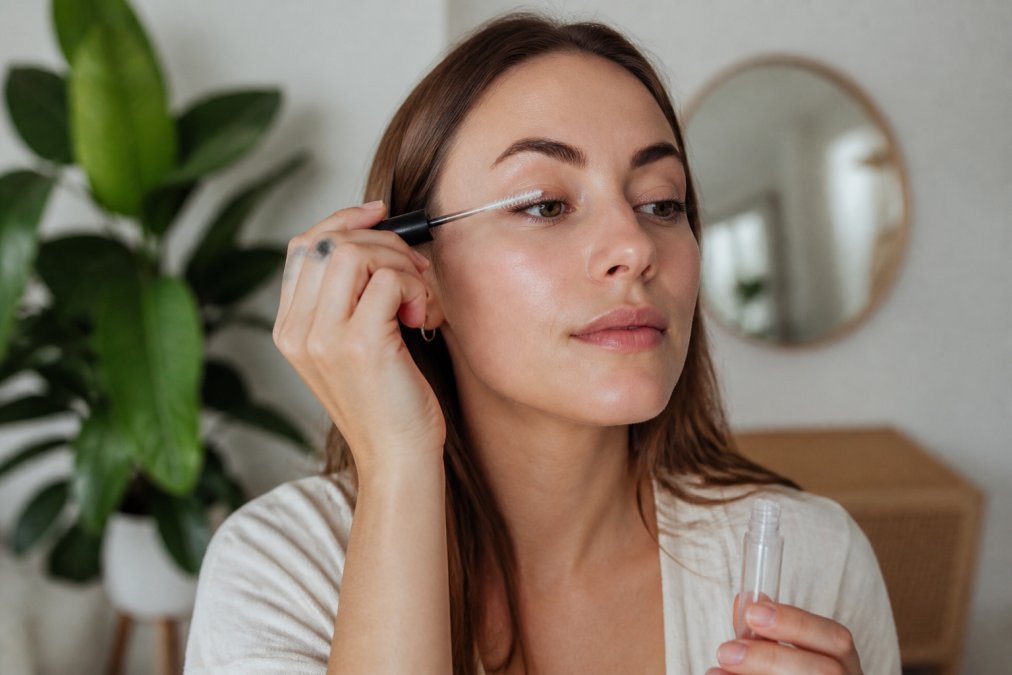
After the first 48 hours, you can resume normal activities, but continue being mindful. Use a lash serum or conditioning treatment three to four times per week. Avoid mascara for at least one week, ideally two. Skip eyelash curlers entirely during the six to eight week cycle. Be cautious around chlorine and saltwater. Avoid rubbing your eyes, as friction is one of the fastest ways to degrade the curl.
Safety and Natural Lash Health
A keratin lash lift is generally safe when applied by a trained professional using quality products (the American Academy of Dermatology). The main safety concern is chemical irritation or allergic reaction. If you have reactive skin or sensitive eyes, patch testing before your first appointment is essential.
Lash breakage is the second concern. If your lashes are already fragile, thin, or damaged from previous treatments or extensions, a keratin lift can accelerate breakage. Healthy, strong lashes tolerate this well. Compromised lashes may not.
Long-term cumulative damage is real but manageable. Repeated keratin lifts do not permanently damage healthy lashes, but they do stress the structure over time. Spacing out treatments or taking breaks every few months significantly reduces this risk. The keratin conditioning does offer genuine protection compared to regular lifts.
Natural lash health depends on aftercare compliance. Strict adherence to the 48-hour moisture restriction and ongoing conditioning significantly reduces risk.
Cost-Per-Wear Analysis: Salon vs. At-Home
At a salon, you're paying for professional application, which dramatically reduces failure risk. A trained technician ensures proper rod sizing, even lotion distribution, and correct timing. The failure rate is low.
At-home keratin lash lift kits offer a different value proposition. They cost less upfront and can be used multiple times. The KYRO Beauty DIY Lash Lifting Kit includes four treatments per kit and costs approximately €49.95. A salon keratin lift typically costs between €60 and €100 per appointment. Over a year, assuming eight treatments, at-home kits cost roughly €100, while salon treatments cost €480 to €800.
The trade-off is application skill. At-home kits require careful technique. Uneven lotion application, incorrect rod sizing, or timing errors can result in failed lifts. Most people succeed on their second or third attempt, but the first lift is often disappointing. Professional-grade salon solutions often contain higher concentrations of active ingredients than consumer kits, and salon lifts typically last the full six to eight weeks.
For frequent lifters, at-home kits make financial sense once you've mastered the technique. For occasional users or people who prioritize reliability, salon treatments justify their cost.
| Method | Cost per Treatment | Treatments per Year | Annual Cost | Skill Required | Failure Risk |
|---|---|---|---|---|---|
| At-home kit (after learning curve) | €12-15 | 8 | €96-120 | Moderate to high | 10-20% |
| Salon keratin lift | €60-100 | 8 | €480-800 | None | 1-3% |
| Regular salon lift | €40-70 | 8 | €320-560 | None | 2-5% |
Conclusion: Is It Worth the Investment?
A keratin lash lift is worth the extra cost if three conditions are met: you lift your lashes regularly, your natural lashes are healthy enough to tolerate repeated chemical processing, and you can commit to strict aftercare.
If you're lifting every eight weeks, the conditioning benefit and extended curl retention justify the premium. By month twelve, your lashes will be noticeably healthier than they would be with regular lifts.
If you lift occasionally or are trying lash lifts for the first time, a regular lift is a smarter starting point. Once you know you like the aesthetic and plan to make it a regular routine, upgrade to keratin.
If your lashes are already compromised, fragile, or damaged, skip the keratin lift entirely and consider a break from chemical processing.
The honest truth: a keratin lash lift is a luxury enhancement, not a necessity. It's worth it for people who have made lash lifting a regular part of their routine and want to minimize long-term damage while maximizing aesthetic results.
If you're ready to explore lash enhancement options that fit your lifestyle and budget, Kyro Beauty offers professional-grade DIY lash lifting kits designed for at-home application with salon-quality conditioning. The kits include nourishing formulas enriched with keratin, collagen, and Vitamin E, the same conditioning benefits of a salon treatment at a fraction of the cost. With beginner-friendly instructions and multiple treatments per kit, you can test whether lash lifting works for your lash type before committing to salon appointments. Shop the Kit and discover how salon-quality results can fit into your routine.
=== FAQ ANSWERS (audit these too, same rules) ===
[1] Q: Is a keratin lash lift better than a regular lash lift? A: Keratin lash lifts include nourishing proteins and conditioning agents that strengthen the lash structure during the chemical processing. Regular lash lifts use basic perming solutions without these extras. Keratin formulas typically cause less lash breakage and maintain curl retention longer. However, both achieve a semi-permanent curl. The choice depends on your lash health and sensitivity. If your lashes are fragile or you've had previous chemical damage, keratin's protein-infused solution offers better protection.
[2] Q: How long does a keratin lash lift last compared to standard lifting? A: A keratin lash lift typically lasts 6-8 weeks, following your natural lash growth cycle. Standard lash lifts usually last 4-6 weeks because the basic solution doesn't protect the lash cuticle as effectively. Duration depends on your anagen phase (active growth period) and how well you follow post-treatment care. Proper aftercare, avoiding water for 24-48 hours and using conditioning agents, extends results significantly for keratin treatments.
[3] Q: What's the real difference between at-home kits and salon treatments? A: Salon professionals have years of training to apply the right rod size, control timing precisely, and customize the lift to your unique lash density and length. At-home kits are beginner-friendly but results vary based on application technique. Cost-per-wear favors at-home: a kit offering 4-5 treatments costs less than two salon visits. However, salon visits guarantee consistent aesthetic results. At-home kits work well if you follow instructions carefully and have average lash type; they're riskier if your lashes are very short, sparse, or prone to sensitivity.
[4] Q: Can I do a keratin lash lift at home safely? A: Yes, modern at-home kits are designed for safe self-application with hypoallergenic formulas and step-by-step guides. The main risk is uneven application or leaving the solution on too long, which causes lash breakage. Start with a patch test if you have sensitive eyes. Follow timing exactly, don't guess. Use the included tools (silicone rods, Y-tool for separation) as instructed. If you're nervous, watch the video tutorial first. Most people succeed on their second or third attempt.
Frequently Asked Questions
Is a keratin lash lift better than a regular lash lift?
Keratin lash lifts include nourishing proteins and conditioning agents that strengthen the lash structure during the chemical processing. Regular lash lifts use basic perming solutions without these extras. Keratin formulas typically cause less lash breakage and maintain curl retention longer. However, both achieve a semi-permanent curl. The choice depends on your lash health and sensitivity. If your lashes are fragile or you've had previous chemical damage, keratin's protein-infused solution offers better protection.
How long does a keratin lash lift last compared to standard lifting?
A keratin lash lift typically lasts 6-8 weeks, following your natural lash growth cycle. Standard lash lifts usually last 4-6 weeks because the basic solution doesn't protect the lash cuticle as effectively. Duration depends on your anagen phase (active growth period) and how well you follow post-treatment care. Proper aftercare, avoiding water for 24-48 hours and using conditioning agents, extends results significantly for keratin treatments.
What's the real difference between at-home kits and salon treatments?
Salon professionals have years of training to apply the right rod size, control timing precisely, and customize the lift to your unique lash density and length. At-home kits are beginner-friendly but results vary based on application technique. Cost-per-wear favors at-home: a kit offering 4-5 treatments costs less than two salon visits. However, salon visits guarantee consistent aesthetic results. At-home kits work well if you follow instructions carefully and have average lash type; they're riskier if your lashes are very short, sparse, or prone to sensitivity.
Can I do a keratin lash lift at home safely?
Yes, modern at-home kits are designed for safe self-application with hypoallergenic formulas and step-by-step guides. The main risk is uneven application or leaving the solution on too long, which causes lash breakage. Start with a patch test if you have sensitive eyes. Follow timing exactly, don't guess. Use the included tools (silicone rods, Y-tool for separation) as instructed. If you're nervous, watch the video tutorial first. Most people succeed on their second or third attempt.
This article was written using GrandRanker
