
Do Lash Lift Kits Damage Natural Lashes? A 2026 Guide

Table of Contents
- What Is a Lash Lift and How Does It Work?
- Can Lash Lift Kits Cause Damage to Natural Lashes?
- Signs of Chemical Damage on Eyelashes
- Lash Lift Aftercare Tips to Prevent Damage
- How to Fix Over-Processed Lashes
- The Dangers of DIY Lash Lift Kits vs. Professional Treatment
- How Often Should You Get a Lash Lift?
- Myths vs. Facts About Lash Lift Damage
Last Updated: August 6, 2026
What Is a Lash Lift and How Does It Work?
A lash lift is a semi-permanent beauty treatment that curls and shapes your natural lashes, making them appear longer and more voluminous without extensions. A technician applies silicone rods to your upper lash line, then applies a lifting solution that breaks down the disulfide bonds in your lash structure. After a set time, a neutralizing lotion re-forms those bonds in the new curved shape, holding the curl for 6-8 weeks. A tinting treatment often follows, darkening the lashes for added definition.
The appeal is obvious: salon-quality results at a fraction of the cost and time of extensions, with minimal daily maintenance. But that chemical process carries real risks if not executed properly.
Can Lash Lift Kits Cause Damage to Natural Lashes?
Yes, lash lift kits can cause damage to natural lashes, particularly when used at home without professional training. The risk is a direct result of how the chemical process works and how easily mistakes can happen during application.
The Chemical Process Behind Lash Lifting
Your lashes are made primarily of keratin, a tough, flexible protein held together by disulfide bonds. When a lifting solution is applied, it contains thioglycolic acid or cysteamine, compounds designed to break down those disulfide bonds temporarily. If the lifting solution stays on too long or the neutralizer isn't applied correctly, the bonds don't reform properly. Your lashes remain structurally compromised, weaker, more brittle, and prone to breakage.
The pH balance of the solution matters enormously. Lash tissue is sensitive to extreme pH levels. Professional-grade solutions are formulated to work within a safe range, typically between pH 6.5 and 8.5. Over-the-counter DIY kits often lack this precision. An imbalanced pH can cause the outer layer of the lash to swell and roughen, leading to a frizzled, dull appearance and increased fragility.
Why DIY Kits Carry Higher Risk
Professional lash technicians are typically trained through accredited beauty schools or manufacturer-specific certification programs. They learn the anatomy of the lash, how to read skin and lash type variations, and how to recognize when something is going wrong mid-procedure. They know that fine, blonde lashes require less processing time than thick, dark ones.
A DIY kit comes with generic instructions and one-size-fits-all protocol. There's no assessment of your individual lash type, no adjustment for your skin sensitivity, and no professional eye watching for signs of over-processing. Most DIY kits provide a basic brush that's difficult to control, especially on your own eye. If a professional damages your lashes, you have recourse. If a DIY kit damages yours, you don't.
Signs of Chemical Damage on Eyelashes
Visual Indicators of Over-Processing
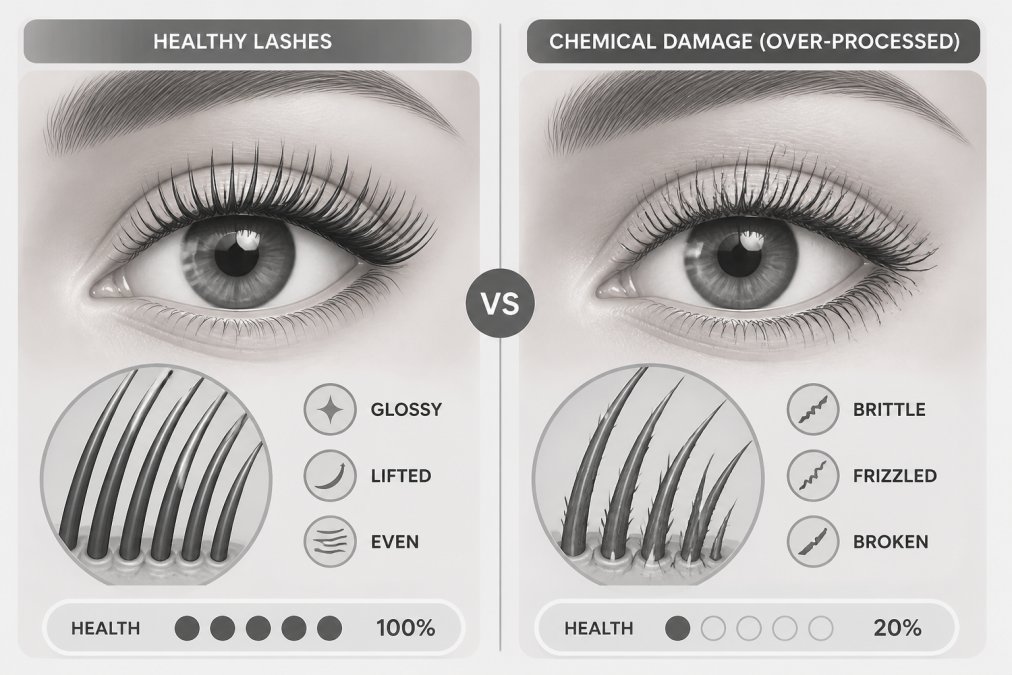
Frizzled or roughened texture is one of the earliest signs. Run your finger gently along your lash line. Healthy lashes feel smooth. Over-processed lashes feel rough, almost like they've been lightly sanded.
Brittleness and breakage follows. Lashes that break off mid-shaft rather than shedding from the root show structural compromise. Healthy lashes shed from the follicle as part of the natural growth cycle.
Loss of shine and color vibrancy indicates damage. Healthy lashes have a subtle sheen because the cuticle layer lies flat and reflects light evenly. When the cuticle is damaged, that reflectivity is lost.
Excessive shedding beyond the normal cycle is significant. You naturally shed 1-3 lashes per eye per day. If you're noticing 5-10 lashes falling out daily, chemical damage is likely.
Lashes that won't hold a curl even after a fresh lash lift is a red flag. If the curl dropped within 2-3 days instead of lasting 6-8 weeks, your lashes may have been over-processed.
When to Stop Using Lash Lift Kits
If you notice any of the above signs, stop using lash lift treatments immediately. Before using any new lash lift kit, apply a small amount of the lifting solution to a single lash and wait the recommended processing time. Rinse thoroughly and observe that lash over the next 24-48 hours. If it shows any damage signs, do not proceed with full application.
Lash Lift Aftercare Tips to Prevent Damage
First 24 Hours: Critical Recovery Window
The first 24 hours after a lash lift are when your lashes are most vulnerable. The disulfide bonds are still stabilizing in their new position, and the outer cuticle layer is still recovering from chemical exposure.
Do not wet your lashes for at least 24 hours after treatment. This includes showering, swimming, or excessive crying. Avoid oil-based products on your lashes during this period, including mascara, eyeliner, and eye makeup removers. Don't rub or touch your lashes. Sleep on your back if possible, or use a silk pillowcase if you sleep on your side.
Long-Term Maintenance for Lash Health
After the first 24 hours, you can resume normal washing, but continue to be gentle. Use a lash-specific cleanser or a very mild, oil-free cleanser. Focus on lash conditioning with a nightly lash serum or conditioning treatment. These typically contain proteins, vitamins, and conditioning agents that help repair the outer cuticle layer and strengthen the lash shaft.
Avoid mascara for at least 48 hours post-treatment. After that, use a gentle, water-based mascara if desired. Do not get another lash lift for at least 6-8 weeks. This is the natural lash growth cycle. Attempting to lift again before your natural lashes have fully cycled through means re-treating lashes that are already weakened from the first lift.
How to Fix Over-Processed Lashes
Recovery Timeline and What to Expect
If your lashes have been damaged by over-processing, recovery is possible but requires patience.
Weeks 1-2: Assessment and Damage Stabilization. Stop all chemical treatments immediately. You may continue to see lashes shedding as the weakest ones give way. Begin a daily conditioning routine with a lash serum.
Weeks 3-6: Active Repair Phase. New, healthy lashes are growing in beneath the damaged ones. Continue your conditioning routine. You should start to notice that the frizzled texture is improving slightly as damaged lashes shed and are replaced.
Weeks 7-12: Visible Recovery. Most of the visibly damaged lashes have shed and been replaced with healthy new growth. Your lash line should look fuller and healthier.
Weeks 13+: Full Recovery. A complete lash growth cycle takes about 12-16 weeks. By the end of this period, virtually all of your lashes should be new, undamaged growth.
Conditioning Treatments and Repair Strategies
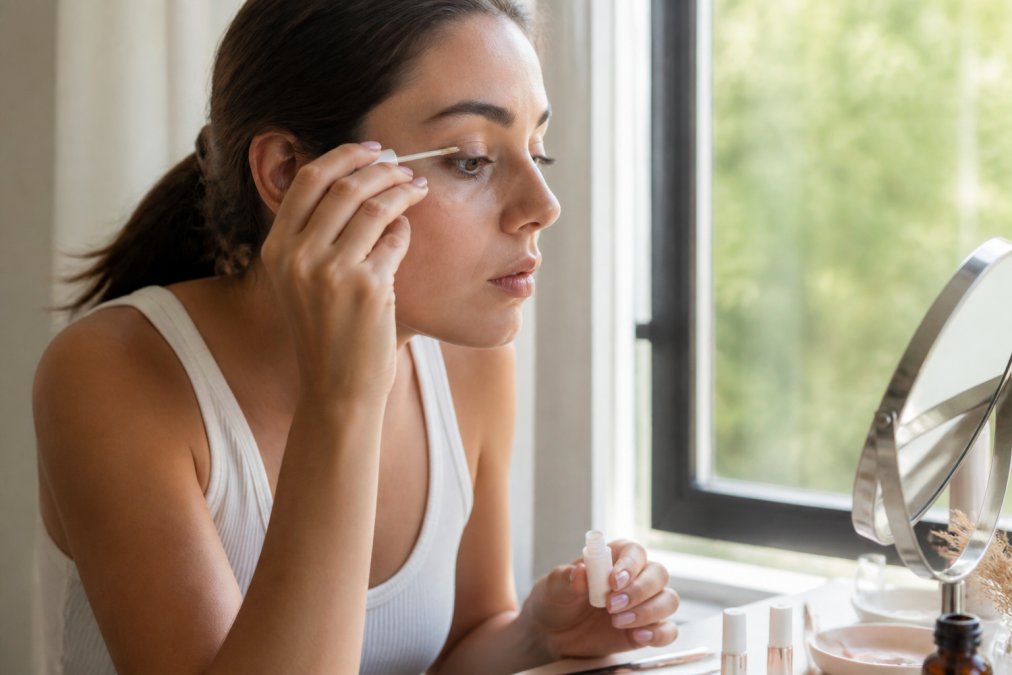
The most effective repair strategy is consistent lash conditioning. A quality lash serum applied daily (preferably at night) can dramatically accelerate recovery. Look for serums containing peptides and proteins that strengthen the lash shaft, biotin and B vitamins that support natural lash growth, panthenol that conditions without heaviness, and hyaluronic acid that hydrates the lash.
Apply the serum along the lash line, similar to how you'd apply eyeliner. Beyond serums, avoid any treatments that stress your lashes. No mascara if possible. No eyelash curlers. No alcohol-based eye makeup removers. Do not rush back to lash treatments. Let your natural lashes complete their growth cycle and recover fully before considering any chemical treatments again.
The Dangers of DIY Lash Lift Kits vs. Professional Treatment
Common Mistakes That Cause Irreversible Damage
DIY lash lift kits fail in predictable ways, and most failures result in irreversible damage.
Incorrect processing time is the most frequent error. People often leave the solution on longer because they want more dramatic results. Every minute past the recommended time increases chemical stress exponentially.
Uneven application is equally common. It's difficult to apply lifting solution evenly to all your lashes, especially on your own eye.
Using the wrong rod size for your lash type creates problems. Fine, delicate lashes need smaller rods and shorter processing times. Most DIY kits come with one or two generic rod sizes.
Skipping or rushing the patch test leads to allergic reactions and unexpected sensitivity. A proper patch test 24-48 hours before full application would catch this.
Not using the neutralizer correctly is perhaps the most damaging mistake. If you don't apply it evenly, leave it on for the full recommended time, or rinse it out completely, the chemical reaction continues beyond the intended point.
Why Patch Testing and Technician Training Matter
Professional lash technicians undergo training specifically in the chemistry and safety of lash lifting. They learn to assess lash type, skin sensitivity, and individual factors that affect how a lash will respond to treatment. They're trained to recognize the early signs of over-processing and stop the treatment before irreversible damage occurs.
A patch test is a non-negotiable part of professional practice. A trained technician will apply a small amount of solution to test your individual sensitivity before proceeding with a full treatment.
How Often Should You Get a Lash Lift?
The safe frequency for lash lifts is every 6-8 weeks, aligned with your natural lash growth cycle. This is the time it takes for your entire lash line to shed and regrow new lashes. If you get a lash lift more frequently, you're re-treating lashes that haven't fully recovered from the previous lift, compounding chemical stress and increasing the risk of permanent damage.
Some people push this boundary and get lifts every 4-6 weeks. This is risky. Your lashes don't have adequate time to recover between treatments. If you're using DIY kits, extend the interval to 8-10 weeks minimum. Pay attention to how your lashes feel and look after each treatment. If the curl drops significantly within 3-4 weeks, that's a sign your lashes may be stressed. For people with naturally fine or delicate lashes, consider getting lifts even less frequently, once every 8-12 weeks.
Myths vs. Facts About Lash Lift Damage
**Myth: "Lash lifts don't cause damage if done by a professional." **Fact: Professional application significantly reduces risk, but damage is still possible if the technician makes mistakes or if your lashes are particularly sensitive.
**Myth: "DIY kits are just as safe as professional treatments." **Fact: DIY kits carry substantially higher risk because there's no trained eye monitoring the process, no customization for your individual lash type, and no accountability if damage occurs.
**Myth: "Damaged lashes can be fixed with another lash lift." **Fact: Over-processed lashes need recovery time, not more chemical treatment. Another lift will only accelerate deterioration.
**Myth: "Lash damage is always temporary and will grow out." **Fact: If lashes are severely over-processed, they will break off rather than grow out intact. While new lashes will eventually grow back, the damage phase can last several months.
**Myth: "Lash serums can't really repair damaged lashes." **Fact: Quality lash serums can't reverse structural damage that's already occurred, but they can significantly support the recovery process by conditioning new growth and strengthening the lash shaft.
**Myth: "You need to wait months between lash lifts to be safe." **Fact: Six to eight weeks is the standard safe interval, aligned with your natural lash growth cycle.
The question of whether lash lift kits damage natural lashes doesn't have a simple yes-or-no answer. The real answer is: they can cause damage, particularly when used at home without professional expertise, but the risk is manageable when you understand the chemistry involved and respect the boundaries of safe application.
If you're considering a lash lift, professional treatment is the safer choice. A trained technician can customize the process to your individual lash type, monitor for signs of over-processing, and provide proper aftercare guidance. If you choose DIY, invest in a patch test, follow instructions precisely, and give your lashes adequate recovery time between treatments. At Kyro Beauty, we understand that salon-quality results matter, which is why our approach emphasizes safe, gentle application techniques that deliver dramatic results without compromising lash health. Whether you're exploring lash lifts or seeking alternatives like our professional-grade lash kits, prioritizing lash health ensures you can enjoy beautiful lashes for years to come. Shop the Kit and discover how professional-grade solutions can enhance your natural beauty safely.
Frequently Asked Questions
Are lash lift kits bad for your eyelashes?
Lash lift kits can damage natural lashes if misused or applied too frequently. The chemical solutions contain thioglycolic acid or cysteamine, which break disulfide bonds in the lash structure to create the lift. When applied incorrectly, left on too long, or used on already-weakened lashes, these chemicals cause brittleness, breakage, and frizzling. Professional application with proper patch testing and neutralizing lotion significantly reduces risk. DIY kits carry higher danger because timing, solution concentration, and pH balance are difficult to control at home.
What are the signs of over-processed lashes?
Over-processed lashes appear brittle, frizzled, or straw-like in texture. They break easily when brushed or touched, may feel dry and rough, and can develop a dull appearance instead of a healthy shine. Severe over-processing causes lashes to become thin and wispy, with visible breakage along the shaft. Some lashes may fall out prematurely or fail to hold a curl. If you notice these signs after a lash lift, stop using lash kits immediately and focus on conditioning treatments to allow your natural lash cycle to restore healthy growth.
How often can you safely get a lash lift?
You should wait 6-8 weeks between lash lifts to allow your natural lash cycle to complete. The human eyelash growth cycle lasts approximately 4-6 weeks, meaning new, undamaged lashes replace old ones during this period. Getting lash lifts more frequently than every 6-8 weeks exposes the same lashes to repeated chemical processing, which accelerates damage and brittleness. Even with professional application, spacing treatments correctly is essential for maintaining lash health and preventing cumulative chemical damage.
Will my lashes ever go back to normal after a lash lift?
Yes, your lashes will return to normal as the natural lash cycle progresses. Damaged lashes shed naturally over 4-6 weeks and are replaced by new, healthy growth from the follicle. However, severe over-processing can temporarily weaken the follicle, potentially affecting the next growth cycle. To speed recovery, use conditioning treatments and lash serums, avoid heat and friction, and allow at least 2-3 full growth cycles before attempting another lash lift. Most people see significant improvement within 8-12 weeks of stopping lash lift treatments.
This article was written using GrandRanker
