
At-Home Lash Lift Side Effects to Watch For

Table of Contents
- What You Need to Know Before Starting an At-Home Lash Lift
- Common At-Home Lash Lift Side Effects You Should Watch For
- Lash Lift Allergic Reaction Symptoms: How to Spot Them Early
- Signs of Over-Processing and How to Fix Over Processed Lash Lift Safely
- Why DIY Kits Carry More Risk Than Professional Application
- How to Prevent Lash Breakage After Lifting
- Your Aftercare Routine and Safety Checklist
- When to See a Doctor or Ophthalmologist
- Frequently Asked Questions
Last Updated: September 7, 2026
What You Need to Know Before Starting an At-Home Lash Lift
Lash lift side effects are the main reason a beauty trend that promises effortless, curled lashes for weeks can end in a trip to the ophthalmologist. The procedure relies on chemical solutions that reshape the natural hair structure, and when those chemicals meet the delicate skin around your eyes, the margin for error shrinks dramatically. At Kyro Beauty, we believe in salon-quality results at home, but we also know that knowledge is the difference between a great outcome and a painful one.
A lash lift is not a cosmetic application like mascara; it is a chemical process. The active ingredients, often thioglycolic acid derivatives, break the disulfide bonds in your lashes so they can be reshaped around a silicone rod. A neutralizing agent then rebuilds those bonds. Get the timing, concentration, or placement wrong, and you are no longer styling your lashes; you are chemically altering them in a way your eyes may reject.
This guide walks you through the specific side effects to watch for, how to spot an allergic reaction early, and what to do if your lashes are over-processed.
Common At-Home Lash Lift Side Effects You Should Watch For
The most frequently reported at-home lash lift side effects to watch for fall into two categories: immediate irritation from skin contact and delayed damage from over-processing. Immediate reactions typically appear within minutes to hours, while hair damage shows up over the following days as your lashes grow and shed.
For most people, a properly applied lash lift causes no lasting harm. But the skin on the eyelid is among the thinnest on the body, and it absorbs chemicals readily. When a DIY kit is applied unevenly, leaks onto the lid, or is left on too long, the consequences range from uncomfortable to genuinely dangerous.
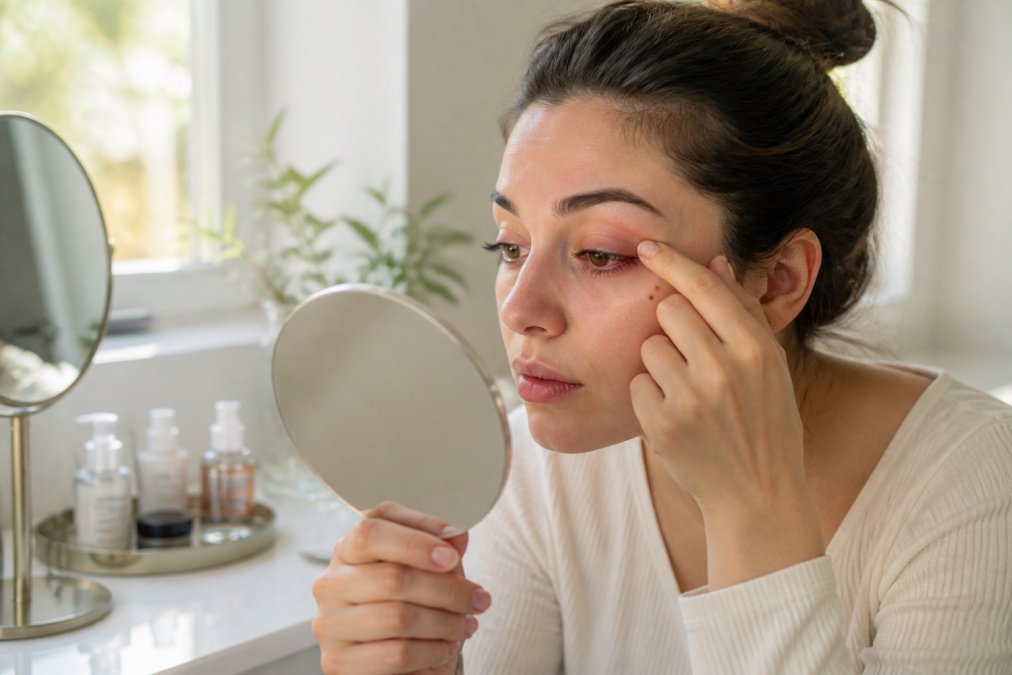
Redness, Swelling, and Watery Eyes
Redness, swelling, and watery eyes are the classic signs of contact dermatitis or simple chemical irritation. The eyelid becomes inflamed because the perm solution has compromised the skin barrier. This is your body's alarm bell, and it usually sounds within the first few hours after application.
Mild redness that fades within a day is uncomfortable but common. Persistent swelling, a burning sensation, or eyes that water constantly indicate the solution has irritated the conjunctiva. If you experience these symptoms, remove any residue with a cool, damp cloth and do not rub the area.
Brittle Lashes and Lash Breakage
Brittle lashes and lash breakage are the delayed side effects that appear days or weeks after the lift. Over-processing occurs when the perm solution is left on too long or the neutralizing agent is applied incorrectly. The result is lashes that look dry, feel stiff, and snap off easily.
Healthy lashes have some natural flexibility. Over-processed lashes lose that elasticity because the disulfide bonds have been over-broken and not properly rebuilt. You might notice tiny gaps in your lash line, or lashes that point in odd directions as they grow out. This damage is not permanent, but it takes a full growth cycle, often several months, to resolve completely.
Lash Lift Allergic Reaction Symptoms: How to Spot Them Early
A lash lift allergic reaction symptoms checklist is essential reading before you mix any solution. Allergic reactions differ from simple irritation because they involve your immune system responding to a specific ingredient, most commonly the thioglycolic acid or the adhesive used to hold the silicone rod in place.
The early signs are easy to mistake for standard irritation. Itching is the key differentiator: chemical irritation burns or stings, while an allergic reaction itches intensely. This is often followed by swelling that goes beyond the lash line. Blistering or hives on the eyelid skin is a more severe response that requires immediate attention.
A patch test is the only reliable way to predict an allergic reaction, and it should be done 24 to 48 hours before your lift (the American Academy of Dermatology). Apply a small amount of the perm solution behind your ear or on your inner arm. If any redness, itching, or swelling develops, do not use the product near your eyes. The American Academy of Dermatology guidance on patch testing recommends this protocol for any new cosmetic product, and it is especially critical for products applied to the eye area.
Signs of Over-Processing and How to Fix Over Processed Lash Lift Safely
Over-processed lashes look dry, feel rough, and may curl too tightly, creating a "fishtail" or unnatural bend at the tips. In severe cases, lashes can appear singed or discolored. But if the solution is still on your lashes and something feels wrong, the priority shifts from fixing the curl to stopping the chemical reaction before it reaches the hair follicle or the eye itself.
Immediate First-Aid: The First 60 Seconds Matter
If the perm lotion or neutralizer has been on longer than the instructions specify, or if you feel burning under the solution, do not wait to see if it passes. The chemical is still actively breaking disulfide bonds. Your first move is to neutralize and remove it.
- Do not close your eyes tightly. Squeezing pushes the solution against the lash line and into the tear duct. Keep your eyes gently closed or looking downward.
- Flush with lukewarm water immediately. Tilt your head sideways over a sink and run a gentle stream of lukewarm, not hot, not cold, water from the inner corner of the eye outward for a full 5 minutes.
- Use a saline rinse if available. Sterile saline solution is more effective than tap water at diluting thioglycolic acid derivatives because its pH is closer to that of tears. Flush with saline for 2-3 minutes after the initial water rinse.
- Do not rub or wipe with a cloth. Rubbing abrades the already-compromised skin barrier and can push the chemical into micro-tears. Instead, blot the area with a clean, dry cotton pad after flushing.
- Apply a cool compress for 10 minutes. A clean cloth soaked in cool water, wrung out, and held gently over the closed lid helps constrict blood vessels and reduces early swelling.
What Not to Do in the First Hour
- Do not apply a neutralizing agent from the kit as a "fix." The neutralizer is designed to rebuild bonds after the perm solution has done its job. Applying it mid-reaction can lock in an over-processed state or cause a second chemical burn.
- Do not apply oil, balm, or Vaseline immediately. Oil creates a barrier that traps the chemical against the skin. Wait until after the flushing and cooling steps, then apply a thin layer of plain petroleum jelly to protect the skin while it recovers.
- Do not use eye drops that contain preservatives. If your eyes are watering or feel dry after flushing, use single-dose, preservative-free lubricating drops.
The Recovery Phase: What Over-Processed Lashes Need
Once the immediate chemical threat is gone, the focus shifts to supporting the hair shaft and follicle through the recovery cycle. Over-processed lashes have lost their natural lipid coating, which is why they feel straw-like and snap easily.
- Switch to a lipid-replenishing cleanser. Look for a gentle facial cleanser containing ceramides or squalane. Ceramides help rebuild the skin barrier on the lid, while squalane conditions the lash shaft without breaking down the remaining lift.
- Apply a peptide-based lash serum nightly. Peptides signal the follicle to enter the anagen (growth) phase more quickly. A serum with copper peptides or biotinoyl tripeptide-1 is a practical choice. Castor oil alone adds shine but does not stimulate follicle recovery.
- Expect a 6-to-8-week regrowth window. Natural lashes cycle every 60 to 90 days. If you catch the over-processing early, the damaged portion will shed and regrow within two full cycles.
- Skip mascara for at least two weeks. The mechanical action of removing mascara pulls on already weakened hairs. If you must wear mascara, use a tubing formula that slides off with warm water and no rubbing.
When Over-Processing Is Actually a Burn
A chemical burn on the eyelid looks different from simple over-processing. The skin will feel hot to the touch, may blister, and can weep clear fluid. This is not a hair problem; it is a skin injury. Treat it like a burn:
- Cleanse once daily with a mild, fragrance-free cleanser.
- Apply a thin layer of medical-grade Manuka honey ointment (available at pharmacies) to the affected lid. Manuka honey has documented antimicrobial properties and supports moist wound healing.
- Do not pick at blisters or peeling skin.
- If the burn area spreads beyond the eyelid crease or shows signs of infection, yellow discharge, increasing redness, warmth, see a general practitioner or dermatologist within 24 hours.
If your lashes are breaking off close to the lid or you experience persistent pain, swelling, or vision changes, this is beyond a home remedy. You need a professional assessment.
Why DIY Kits Carry More Risk Than Professional Application
The appeal of a DIY kit is obvious: it costs a fraction of a salon visit and delivers results on your schedule. But the risk profile is fundamentally different. A professional has training in application technique, understands timing nuances for different lash types, and works in a controlled environment with proper lighting and sterile equipment.
DIY kits put the entire burden on you. You are estimating the correct rod size for your eye shape, applying chemicals millimeters from your eyeball, and timing the process while holding a mirror. One sneeze, one blink, or one moment of distraction can cause the solution to run into your eye. harmful skincare ingredients.
Professional certification exists for a reason. Technicians train to recognize eye shapes that are prone to adverse reactions and to apply products in a way that minimizes skin contact. But the deeper issue is not just technique, it is the chemistry inside the bottle. Understanding what is actually in your kit is the single most important step you can take to reduce risk.
The Ingredient That Does the Work, and the Damage
The active ingredient in virtually every lash lift kit is a thioglycolate salt, usually ammonium thioglycolate or glyceryl thioglycolate. These are the same chemicals used in permanent wave solutions for hair. Their job is to break the disulfide bonds, the sulfur-to-sulfur links, that give keratin its strength and shape. Once broken, the lash can be molded around a rod. A second solution, typically hydrogen peroxide or sodium bromate, then rebuilds those bonds to lock in the curl.
The risk lies in the concentration and the pH. Professional-grade thioglycolate solutions are formulated at a pH of 8.5 to 9.5, which is alkaline enough to swell the hair shaft and open the cuticle, but buffered to minimize skin penetration. Cheaper DIY kits often cut corners on buffering agents. A poorly buffered solution can spike above pH 10, at which point it begins to dissolve the lipid layer of the skin, not just the hair.
How to Read a Kit's Ingredient List Like a Technician
Before you buy any kit, check the ingredient list for these three red flags:
- No concentration or percentage listed. Professional products state the active ingredient percentage (typically 5-10% thioglycolate for lash use). If the kit does not disclose this, the manufacturer is not controlling for safety.
- Sodium hydroxide (lye) as the pH adjuster. Sodium hydroxide is a strong alkali that can cause immediate chemical burns at high concentrations. Professional formulas use milder buffers like aminomethyl propanol or triethanolamine. If you see sodium hydroxide in the first five ingredients, put the kit down.
- Fragrance or essential oils. The eyelid skin has no oil glands and absorbs chemicals faster than any other skin on the body. Fragrance compounds are common contact allergens. A kit that lists "parfum" or "essential oil blend" is adding irritants with zero functional benefit.
What "Sensitive" Formulas Actually Change
Some kits market themselves as "gentle" or "for sensitive eyes." Chemically, this usually means one of three things:
- A lower active percentage, typically 3-5% thioglycolate instead of 8-10%. This means slower processing time (often 12-14 minutes instead of 8-10), which gives you more margin for error but also more time for the solution to migrate.
- A buffered pH closer to 8.0, closer to the skin's natural pH of 4.5-5.5 than the standard 9.0. This reduces skin irritation but also makes the lift less effective on coarse, straight lashes.
- Added humectants like glycerin or panthenol, which help retain moisture in the hair shaft during processing. These do not reduce the chemical activity but do reduce post-lift dryness.
The Real Cost Difference: What You Are Not Paying For
The price gap between a salon visit and a DIY kit looks like a saving, but it is buying something specific: a trained eye, a sterile environment, and, most importantly, a product liability chain. If a professional product causes injury, the salon and the manufacturer are accountable. When you buy a kit online from an unregulated seller, you are the sole party responsible for safe application, and recourse is limited if the product is defective.
Professional technicians also perform a patch test 24 to 48 hours before the appointment and a lash health assessment to check for gaps, recent extensions, or signs of prior chemical damage. No DIY kit can replicate that pre-screening.
The One Question to Ask Before You Buy
If a kit's packaging does not tell you the active ingredient percentage, the pH range, and the buffering system, the manufacturer has not done the safety work. A reputable brand, whether professional or at-home, will publish this information because it demonstrates quality control. Vague claims like "professional strength" or "salon results" without supporting chemistry are the strongest predictor of a bad outcome.
At home, that applicator is you, without the benefit of training or backup. The least you can do is know exactly what you are putting on your lashes.
How to Prevent Lash Breakage After Lifting
Preventing lash breakage after lifting begins the moment your lift is complete. For the first 24 hours, your lashes are still setting. Keep them completely dry. No steam, no sweat, no tears. Water will disrupt the neutralizing process and weaken the new bonds.
After that initial period, adopt a gentle care routine. Avoid oil-based makeup removers near the lash line, as oils can break down the lift. Use a water-based cleanser and a soft brush to keep lashes separated. Do not sleep face-down on your pillow, as the friction will bend and snap lifted lashes.
A common mistake is rubbing your eyes when they itch or water. This is the single fastest way to cause lash breakage after a lift. If your eyes are irritated, use preservative-free eye drops rather than touching the area.
Your Aftercare Routine and Safety Checklist
A structured aftercare routine protects your investment and your eye health. Follow this checklist for the first week after your lift:
- Day 0-1: Keep lashes completely dry. Avoid cleansing the eye area.
- Day 2-3: Gently rinse with cool water. Pat dry with a clean towel, never rub.
- Day 4-7: Resume normal cleansing with a water-based, oil-free formula.
- Daily: Brush lashes with a clean spoolie each morning.
- Avoid: Mascara for the first 48 hours, and oil-based products for the full week.
| Side Effect | First Sign | Immediate Action | When to See a Doctor |
|---|---|---|---|
| Chemical Irritation | Redness, burning | Rinse with cool water, remove residue | If burning persists over 1 hour |
| Allergic Reaction | Intense itching, swelling | Stop use, take oral antihistamine | If swelling spreads or breathing is affected |
| Over-Processing | Dry, brittle lashes | Stop all chemical treatments, condition | If lashes break at the root |
| Corneal Contact | Sharp pain, vision blur | Flush eye with saline solution for 15 minutes | Immediately, this is an emergency |
When to See a Doctor or Ophthalmologist
Most at-home lash lift side effects to watch for are manageable with careful home care, but some situations demand immediate medical attention. Do not wait to see if symptoms improve on their own when your vision is involved.
Seek emergency care if you experience sharp pain in the eye itself, not just on the lid. Blurred vision, sensitivity to light, or the sensation of something stuck in your eye could indicate a corneal abrasion, a scratch on the clear surface of the eye. This requires professional treatment to prevent infection and scarring.
Persistent symptoms are another red flag. If redness, swelling, or watery eyes have not improved after 48 hours, or if you develop discharge, you may have conjunctivitis or blepharitis, an inflammation of the eyelid margin. The American Academy of Ophthalmology resource on eye emergencies advises that any chemical exposure to the eye warrants a prompt evaluation, even if symptoms seem mild initially.
At Kyro Beauty, we designed our kits to be gentle on sensitive eyes and simple to apply, because we believe the best results come from products that respect the biology of your lashes and the sensitivity of your skin. The goal of this guide is not to scare you away from at-home beauty. It is to make sure you approach it with the same care a professional would.
The challenge with at-home lash lifts is not the procedure itself; it is the lack of education around what can go wrong and how to respond. Kyro Beauty offers all-in-one kits with clear instructions and formulas designed for sensitive eyes, helping you achieve salon-quality results without guesswork. With shower-proof, long-lasting formulas and super-fast application, you can enhance your natural lashes safely and confidently. Get started with Kyro Beauty and enjoy beautiful lashes that look as healthy as they feel.
Frequently Asked Questions
Can an at-home lash lift cause permanent damage to my eyelashes?
Permanent damage is rare but possible if you leave the perm solution on too long or use a formula stronger than your lashes can handle. Over-processing can weaken the hair shaft, leading to breakage that takes months to grow back. In severe cases, chemical burns on the eyelid can scar the follicle. Always follow the timing instructions exactly and do a patch test 24 hours before applying any product near your eyes.
How do I know if my lashes have been over-processed?
Over-processed lashes look dry, brittle, and may point in odd directions instead of holding a smooth curl. You might notice lashes snapping off when you brush them or a crinkled, bent appearance at the tips. If your eyelid feels sore or looks red beyond the first hour after the treatment, that is another sign. Stop using any lifting products immediately and focus on conditioning your lashes with a nourishing serum.
What are the signs of an allergic reaction to lash lift adhesive?
An allergic reaction usually appears within 24 hours and includes eyelid swelling, redness, itching, and a burning sensation. Some people develop watery eyes, conjunctivitis, or small blisters on the lash line. If you experience any of these symptoms, gently rinse your eyes with cool water and do not rub. Remove the lashes from the silicone rod if they are still attached and avoid touching the area. Seek medical advice if swelling worsens.
When should I see a doctor after a lash lift complication?
See a doctor or ophthalmologist immediately if you have severe pain, vision changes, or the product gets into your eye and you cannot rinse it out. Also seek medical help if eyelid swelling spreads to your cheek or forehead, if you develop a fever, or if symptoms like redness and irritation last longer than 48 hours. Do not try to treat a suspected chemical burn on your own with ointments or drops.
