



Is Polygel Better Than Dip Powder for Beginners? 2026 Guide

Table of Contents
- Polygel vs Dip Powder: Key Differences at a Glance
- What Is Polygel and How Does It Work?
- What Is Dip Powder and Why Do Beginners Choose It?
- How Long Do Polygel Nails Last Compared to Dip Powder?
- Removing Polygel vs Dip Powder: Which Is Easier?
- Nail Health and Safety: What Beginners Should Know
- Which System Fits Your Skill Level and Lifestyle?
- Frequently Asked Questions
Last Updated: September 27, 2026
Polygel vs Dip Powder: Key Differences at a Glance
If you're weighing is polygel better than dip powder for beginners, the short answer is no, dip powder wins on ease of application, while polygel wins on sculpting control. Dip powder manicures can last up to five weeks when applied properly, according to Allure's nail enhancement durability comparison, yet that durability comes with a steeper learning curve for polygel users.
This guide breaks down both systems honestly, including where each one fails beginners.
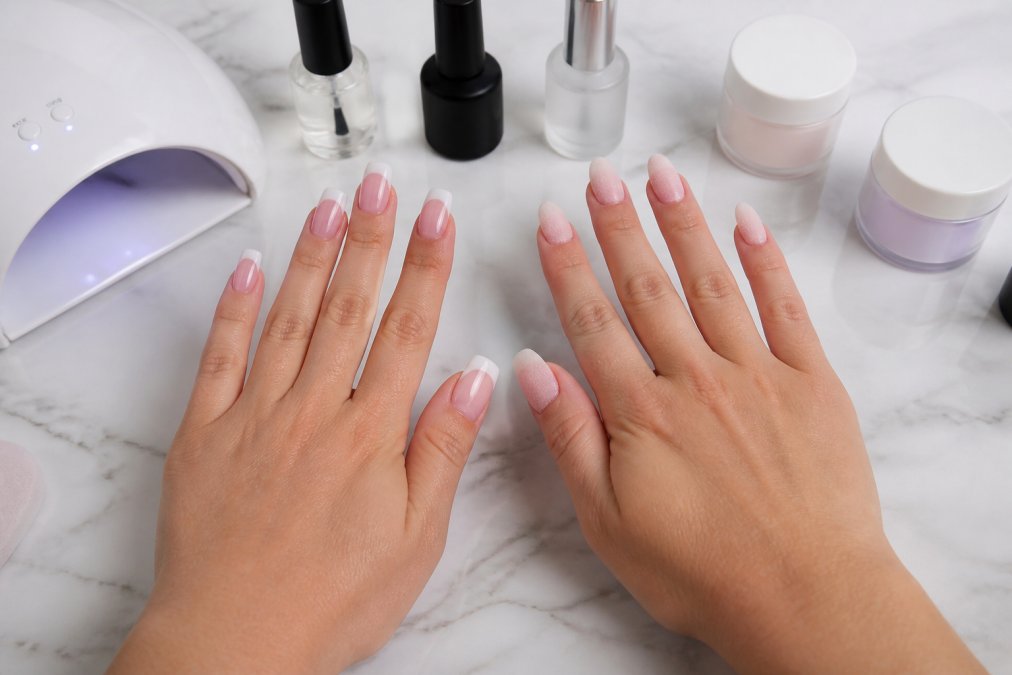
Here's the core distinction before we go deeper:
| Factor | Polygel | Dip Powder |
|---|---|---|
| Curing method | UV/LED lamp required | No lamp needed |
| Application time | 60-90 minutes | 30-45 minutes |
| Learning curve | Steep | Gentle |
| Removal | Filing or soak-off | Soak-off with acetone |
| Best for | Custom extensions | Fast, durable overlays |
What Is Polygel and How Does It Work?
Polygel is a hybrid nail enhancement that combines the flexibility of gel with the strength of acrylic. It stays workable until you cure it under a UV or LED lamp, which gives you unlimited sculpting time before the product sets.
That non-leveling formula is polygel's biggest advantage. You can shape, adjust, and reposition before curing. The trade-off? You need a lamp, and you need to build an apex correctly or the nail will look lumpy.
Polygel Application for Beginners: What to Expect
Most beginners underestimate the setup. A typical first attempt runs 90 minutes or longer.
The common failure points are predictable:
- Product sliding into the cuticle before curing
- Uneven apex building causing lifting within days
- Over-filing the natural nail during prep
- Air bubbles trapped under the overlay
Kits like the Makartt Polygel Starter Kit (around €35) include dual forms to reduce shaping errors. The Modelones Polygel Extension Kit (around €30) adds slip solution and multiple nail forms, which helps first-timers manipulate the product without sticking.
What Is Dip Powder and Why Do Beginners Choose It?
Dip powder is a nail enhancement system where you dip the prepared nail into colored acrylic powder, alternating with a base coat and activator to build strength. No lamp, no sculpting, no curing time.
Community consensus on platforms like Reddit's r/Nails discussions on at-home nail systems leans heavily toward dip powder for beginners, largely because the technique is forgiving. You can't really "over-sculpt" a dip manicure.
The SNS Dip Powder System (around €25) is a straightforward entry point. The Kiara Sky Dip System (around €28) adds a vitamin-infused formula and a wide color range for people who care about nail health.
Dip powder's weakness is the process itself: dipping fingers into shared powder containers raises sanitation concerns, and the finished nail can feel thicker than gel.
How Long Do Polygel Nails Last Compared to Dip Powder?
Polygel nails typically last two to three weeks before a fill-in is needed. Dip powder manicures run three to four weeks, and up to five weeks with careful maintenance, per SNS Nails' comparison of dip powder, gel, and acrylic.
That gap matters if you want fewer appointments. But longevity isn't purely about the product, prep quality, nail plate health, and lifestyle all shift the number.
Polygel holds up better on active hands because it's more flexible. Dip powder is harder but more brittle at impact points, so a slammed finger can chip it. If you type all day or work with your hands, polygel's flexibility often wins.
Removing Polygel vs Dip Powder: Which Is Easier?
Dip powder removal is easier in principle but slower in practice. Both systems require soaking in acetone or filing down, and both can damage the nail plate if rushed. The real difference is how much filing each one demands before the acetone can do its job.
According to Byrdie's expert analysis on nail system removal, dip powder's durability makes it harder to remove than gel, which increases damage risk when done incorrectly.
Step-by-Step Removal for Each System
Dip powder removal (budget 20-30 minutes):
- File the top layer of activator and top coat with a medium-grit file. Don't file into the color layer, you're just breaking the seal.
- Soak a cotton pad in acetone, place it on the nail, and wrap with foil. Repeat on all ten nails.
- Wait 10-15 minutes. The powder should look soft and lifted at the edges.
- Gently push the softened product off with a cuticle stick or orange stick. Do not scrape hard.
- Re-wrap any stubborn nails for another 5 minutes rather than forcing them.
- Buff the nail plate lightly and apply cuticle oil.
Polygel removal (budget 30-45 minutes):
- File or e-file the top layer down to a thin shell. Polygel is denser than dip powder, so this step takes longer.
- Soak in acetone with foil wraps for 15-20 minutes, or use an e-file to remove the bulk mechanically.
- Push off softened product gently. Polygel often comes away in larger pieces than dip powder.
- For a fill-in instead of a full removal, you only need to file back the growth area and rebalance, this saves 20-30 minutes.
Why Removal Damages Nails (and How to Avoid It)
The thing nobody tells you about removal: the damage usually comes from picking and peeling, not from the acetone itself. If you can't wait, you'll take nail plate layers with the product. Acetone is drying, but it doesn't thin the nail plate, mechanical force does.
A common pattern is that beginners peel off a lifting edge instead of soaking it. That single habit causes more long-term damage than either enhancement system.
Long-Term Nail Bed Health Between Sets
This is the part most comparison guides skip. Your nail plate needs recovery time between enhancements, and how much depends on what you see after removal.
- Healthy nail plate: Pink, no white spots, doesn't flex under light pressure. You can reapply after a few days.
- Compromised nail plate: White spots (often called keratin granulations), visible ridges, or a nail that flexes easily. Wait two weeks before your next set.
- Damaged nail plate: Pain, redness, or separation from the nail bed. Skip enhancements entirely until it grows out.
Back-to-back enhancements thin the nail plate over time, and thin nails lift faster, which starts the cycle again. The fix isn't a product, it's spacing your sets and using cuticle oil daily to keep the plate flexible.
Nail Health and Safety: What Beginners Should Know
Methacrylate allergies are the real risk with both systems, and they're more common than most guides admit. Repeated skin contact with uncured product triggers sensitization, which is permanent.
Keep uncured product off your skin. That single habit prevents most allergic reactions.
Sanitation is the other concern. Dipping into a shared powder jar after touching your nails contaminates the container. Pour powder into a separate dish instead.
For long-term nail bed health, give your nails a break between sets.
Which System Fits Your Skill Level and Lifestyle?
Dip powder is the better starting point for most beginners. It's faster, needs no lamp, and tolerates mistakes. Polygel suits people who want custom extensions and don't mind practicing for a few sets before results look clean.
Frequently Asked Questions
What is the main downside of using polygel at home?
Polygel requires a UV or LED curing lamp and a slip solution to manipulate the product before it sets. The learning curve is steeper than dip powder because you need to sculpt the nail shape yourself using dual forms or paper forms. First-time users often struggle with getting an even thickness and avoiding air bubbles. It also takes longer per hand, typically 60 to 90 minutes for a full set until you build muscle memory.
How does application time differ between polygel and dip powder?
Dip powder application is faster for beginners because you brush on a base coat, dip the nail into powder, and repeat. Most first-timers finish a full set in 30 to 45 minutes. Polygel takes longer, usually 60 to 90 minutes, because you shape each nail with a brush and slip solution before curing under a lamp. If speed matters most, dip powder wins on the first few attempts.
Do polygel nails fall off easily compared to dip powder?
Neither system should fall off if nail prep is done properly. Polygel adheres well when the nail plate is dehydrated and lightly buffed. Dip powder bonds through layers of base and activator, creating a hard shell. Lifting or popping off usually traces back to skipped prep, touching the cuticle with product, or natural nail flexibility. With correct prep, both can last two to four weeks.
Which nail enhancement option is considered healthier for natural nails?
Dip powder is often cited as gentler because it adds strength without the bulk of a sculpted extension and does not require UV light to cure. Polygel is lightweight and flexible, which reduces stress on the nail bed. Both can damage nails if removed incorrectly. The healthiest approach is proper nail prep, avoiding over-filing, and using acetone soak-off rather than peeling or prying product off.
Choosing between polygel and dip powder comes down to how much practice time you're willing to invest. Kyro Beauty builds kits around that same idea: simple application, long-lasting results, and no steep learning curve. Our press-on lashes need no glue, our formulas are shower-proof and gentle on sensitive eyes, and our all-in-one brow and lash kits handle shaping and tinting in one session. Get started with Kyro Beauty and skip the trial-and-error.
